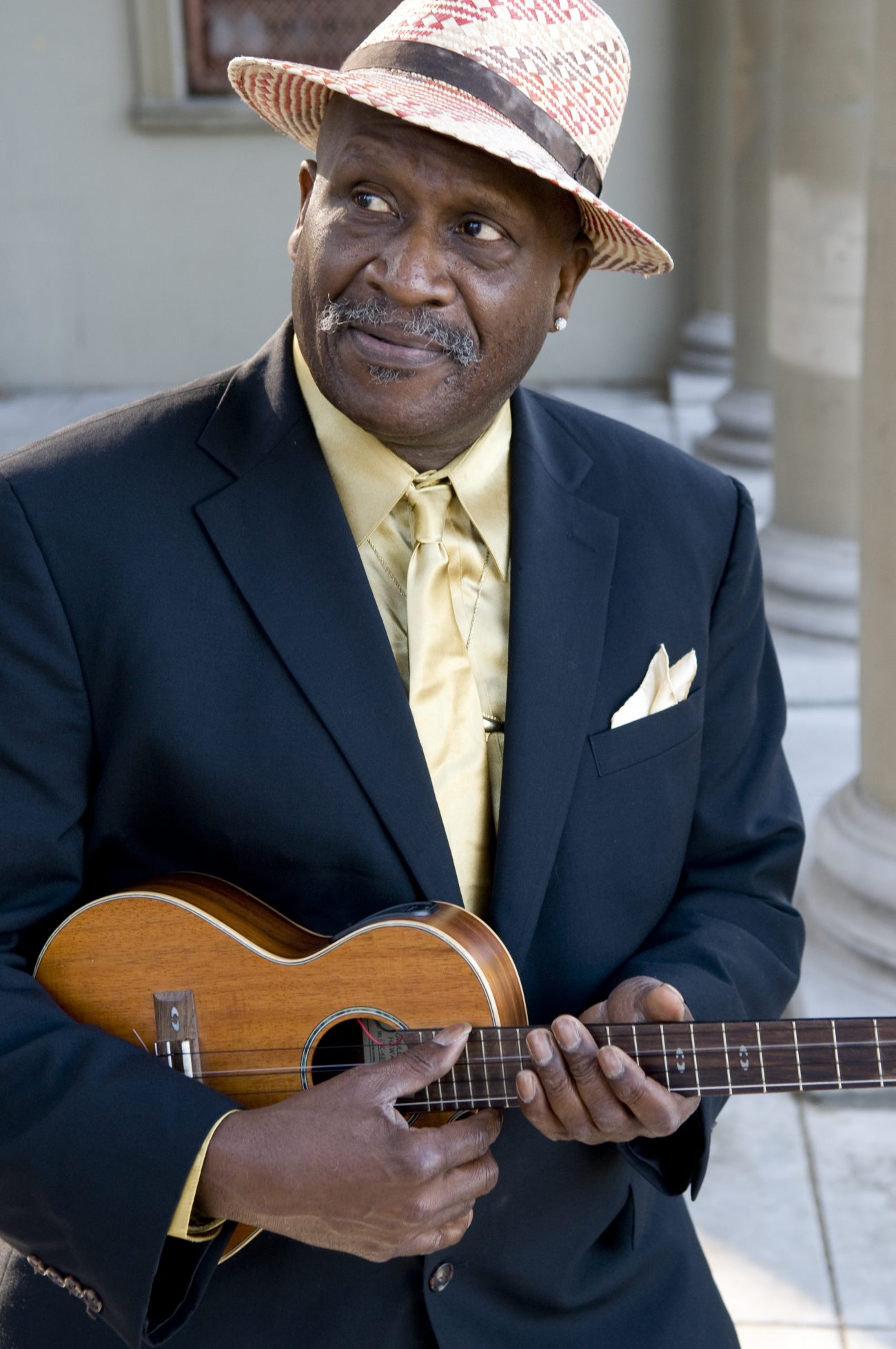
Taj Mahal: The Man Who Blew the Walls Off the Blues
Born Henry St. Claire Fredericks Jr. in Harlem in 1942, Taj Mahal didn’t grow up in a shack in Mississippi.
He grew up in Springfield, Massachusetts, in a house filled with jazz, gospel, Caribbean music, and sounds pulled from around the world on the family’s shortwave radio. His mother sang in a gospel choir. His father was an Afro-Caribbean jazz arranger and piano player.
Before Taj became a full-time musician, he seriously considered becoming a farmer. He studied agriculture and animal husbandry at the University of Massachusetts Amherst and worked on a dairy farm.
That connection to the soil never left him.
Taj’s music has always sounded like it came out of the ground instead of a corporate recording studio. It has dirt under its nails, sweat on its back, and roots running in every direction.
When he arrived on the scene in the mid-1960s, the blues revival was mostly filled with young white musicians trying to sound like old men from the Mississippi Delta.
Taj went the other way.
He respected the old music, but he wasn’t interested in becoming a museum piece. He played the blues with youthful energy, deep groove, and a curiosity that reached far beyond the American South.
To Taj Mahal, the blues was never a dusty formula.
It was a living, breathing, dancing language.
The Gear of a Polymath: Nationals, Banjos, and Bare Fingers
For the gearheads hanging around The Blues Garage, Taj Mahal’s setup is a beautiful mess of tradition, curiosity, and whatever instrument happens to make the right sound.
Calling him a guitarist doesn’t come close to covering it.
Taj plays acoustic and electric guitar, National resonator guitar, harmonica, piano, clawhammer banjo, bass, mandolin, ukulele, and more. Hand him something with strings, keys, or reeds, and there’s a good chance he can make it talk.
When Taj picks up a guitar, it’s often a National resonator or a big-bodied acoustic. His fingerpicking pulls from country blues and the rolling Piedmont tradition, where the thumb keeps a steady bass line while the fingers work the melody above it.
It can sound like two musicians playing at once.
Unlike the sharp, stinging lead style of the Three Kings, Taj’s playing is usually more about groove and texture. His thumb-and-finger attack feels organic and woody, as if every note has been cut and shaped by hand.
Even when he plugs in an electric guitar, he keeps that finger-on-string intimacy.
Nothing sounds mass-produced.
The Rising Sons: Too Early for Their Own Good
After moving to California in 1964, Taj formed the Rising Sons with a young Ry Cooder.
That band was years ahead of its time.
The Rising Sons mixed blues, folk, country, and rock before the music business had a comfortable label for it. Today, somebody would call it Americana, package it with a beard and a vintage truck, and sell it back to us.
Back then, the record company didn’t know what to do with it.
The band recorded enough material for an album, but only one single was released during its original run. The full collection didn’t see daylight until decades later.
The Rising Sons didn’t last, but they helped clear the runway for Taj’s solo career.
Jesse Ed Davis: The Fire Behind the Early Records
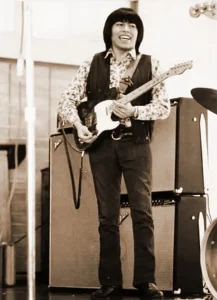
When Taj launched his solo career, another great guitarist became a major part of his sound: Jesse Ed Davis.
Davis was a Native American guitarist from Oklahoma who could play slide, lead, rhythm, country, blues, and jazz without ever sounding like he was trying to impress the other guitar players in the room.
He just played the right damn note.
Davis played guitar and piano on Taj’s early albums, giving those records much of their fire, muscle, and electric bite.
His slide guitar on Taj’s 1968 recording of “Statesboro Blues” is one of the great overlooked performances in blues-rock history.
Taj brought the voice, harmonica, arrangement, and attitude. Jesse Ed Davis brought the slashing slide guitar that helped turn Blind Willie McTell’s old song into an electric blues powerhouse.
That recording also helped provide the blueprint for the Allman Brothers Band’s later version.
Duane Allman heard Taj’s recording and took that slide-guitar attack into the stratosphere—but Jesse Ed Davis helped light the fuse.
Taj’s self-titled debut and The Natch’l Blues both arrived in 1968.
These records are mandatory listening.
“Leaving Trunk,” “Statesboro Blues,” “Checkin’ Up on My Baby,” and “She Caught the Katy” showed that Taj could dig deep into the past without getting buried there.
But Taj didn’t build that sound alone.
Jesse Ed Davis deserves his share of the credit. His playing gave those early records teeth, grease, and a dangerous electric edge.
Taj’s gravelly, soulful growl rode on top of it all, making the songs sound old, new, rural, urban, loose, and tight at the same time.
The Caribbean, Africa, and Hula Blues
What makes Taj Mahal different is his absolute refusal to stay in one lane.
During the 1970s and 1980s, he pushed deeper into the connections between American blues and the music of the Caribbean, West Africa, Latin America, and Hawaii.
He understood that a blues shuffle, a reggae rhythm, and an African groove might look different on paper but could still have the same blood running through them.
After moving to Hawaii, Taj eventually formed the Hula Blues Band, blending blues with Hawaiian instruments and island rhythms.
He proved that the blues could be played on a ukulele and still carry all the soul and grit of a Chicago dive bar.
Taj also worked with musicians from West Africa, including Malian kora master Toumani Diabaté. Their 1999 album, Kulanjan, helped trace the musical conversation between West Africa and the American blues.
This wasn’t “world music” made for a hotel lobby.
Taj was following the roots backward to see where they led.
He reminded us that the blues is a feeling, not a formula—and that feeling crossed oceans long before anybody plugged a guitar into an amplifier.
TajMo: Two Masters on the Same Porch
In 2017, Taj Mahal joined forces with Keb’ Mo’ for the TajMo project.
On paper, the pairing made perfect sense.
Taj was the globe-trotting explorer who had spent decades knocking down the walls between musical styles. Keb’ Mo’ was the smooth modern craftsman who knew how to bring country blues into the present without sanding away all the rough edges.
Together, they sounded like two old friends swapping songs on a porch—except this porch had Bonnie Raitt, Joe Walsh, Sheila E., and Lizz Wright dropping by.
The album TajMo was upbeat, loose, and full of life. Songs like “Don’t Leave Me Here,” “All Around the World,” “That’s Who I Am,” and “Soul” carried the blues forward without dragging it behind them.
The album won the 2018 Grammy for Best Contemporary Blues Album and sent Taj and Keb’ out on a major tour.
I saw TajMo in Gainesville, Florida, and they were great.
There was no battle for the spotlight and no feeling that two famous names had been bolted together just to sell tickets. Taj and Keb’ genuinely enjoyed playing with each other.
You could see it.
You could hear it.
You could feel it from the audience.
The show had musicianship, humor, warmth, and plenty of grease. It felt less like a formal concert and more like being invited onto the world’s best front porch.
Nearly eight years later, Taj Mahal and Keb’ Mo’ reunited for the 2025 album Room on the Porch.
The chemistry was still there.
The new record mixed blues, soul, folk, country, and roots music without stopping to ask which shelf it belonged on.
That’s the real strength of TajMo: two masters honoring tradition without letting tradition boss them around.
More Than 60 Years in the Field
Like B.B. King, Taj Mahal has always been a working musician.
He has recorded dozens of albums, toured the world, won multiple Grammys, and spent more than 60 years experimenting without losing the grease that makes the music work.
Whether he’s playing a solo acoustic set, blowing harmonica, picking a banjo, fronting an electric band with horns, or sharing the stage with musicians from halfway around the world, Taj brings a sense of joy to the music.
That’s his secret.
Taj didn’t take the sadness out of the blues.
He showed us what comes after the sadness.
Resilience.
Survival.
Celebration.
Connection.
He proved that you can study this music like a scholar without playing it like a professor.
Why Taj Mahal Is the Global Engine of The Blues Garage
At The Blues Garage, we celebrate Taj Mahal because he’s the ultimate custom builder.
He didn’t take the factory-standard blues and drive it straight off the lot. He chopped it, channeled it, rebuilt the engine, and gave it a new coat of paint.
Then he drove it through Mississippi, the Caribbean, West Africa, Hawaii, and anywhere else the groove carried him.
Taj reminds us that the blues is a wide-open road. It can cross oceans, change instruments, pick up new rhythms, and still feel like home.
He kept the fire burning by adding new wood to the pile.
That’s why, more than 60 years into his career, Taj Mahal remains one of the most important, adventurous, and flat-out joyful musicians the blues has ever produced.
